
gaming-monoaesthetic.md
last modified 2026-03-19remember how all the games were brown at the start of the seventh generation of game consoles?
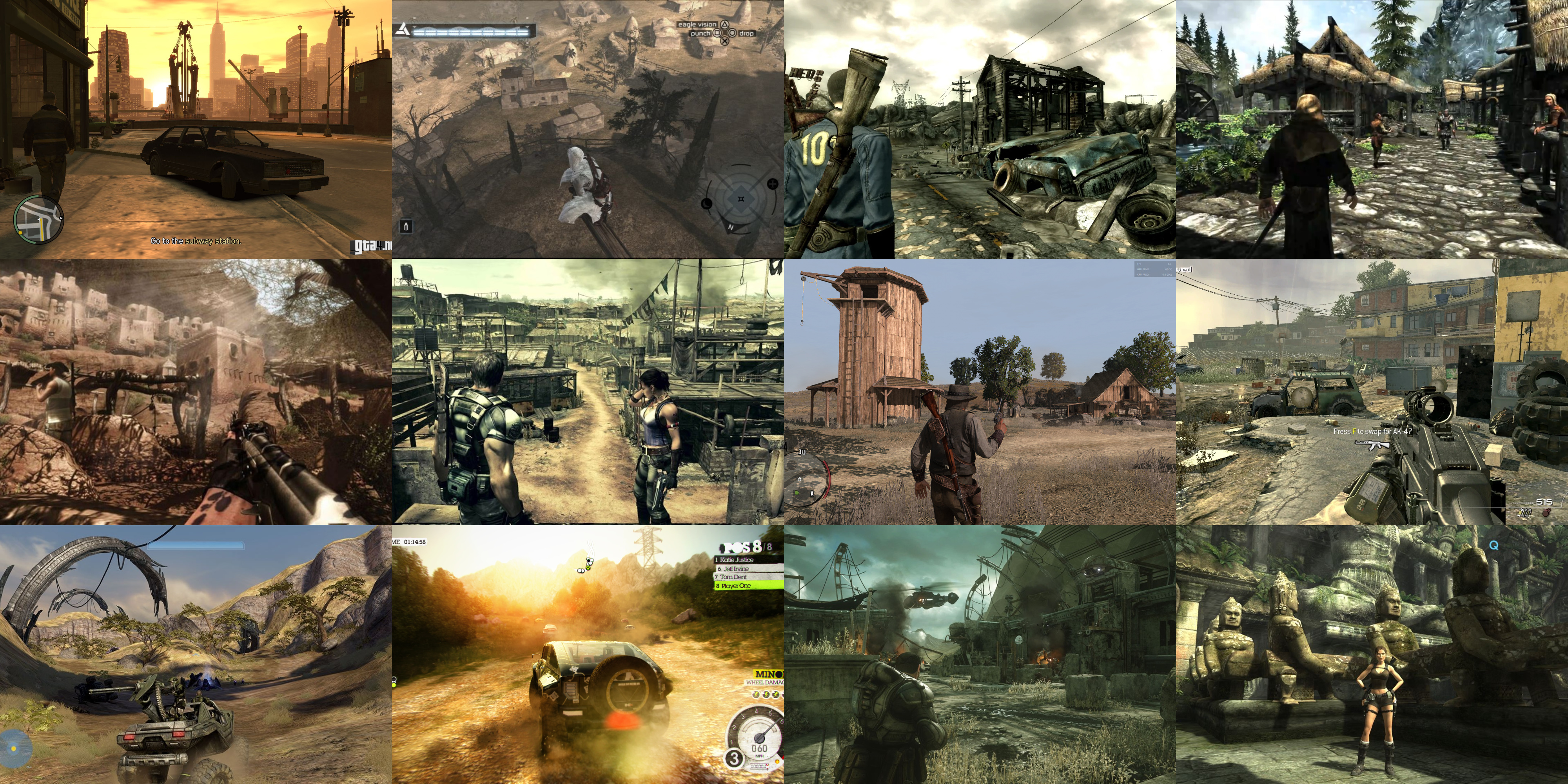
i'd be interested in theories as to why this particular aesthetic took such a strong hold. i think a part of it was just bandwagoning off of Gears of War and Resident Evil 4, but this generation also introduced the programmable graphics pipeline -- at least, across all three major consoles. the xbox had them last generation, and the gamecube provided its own spin on the concept.
but a while back i saw a promo clip for a Halo game (don't remember which one) and thought "huh, is that Horizon Zero Dawn?" before seeing master chief or whoever the franchise has as the big guy now (i haven't played halo)
and it made me realize that i think we're in a kind of monoaesthetic of our own
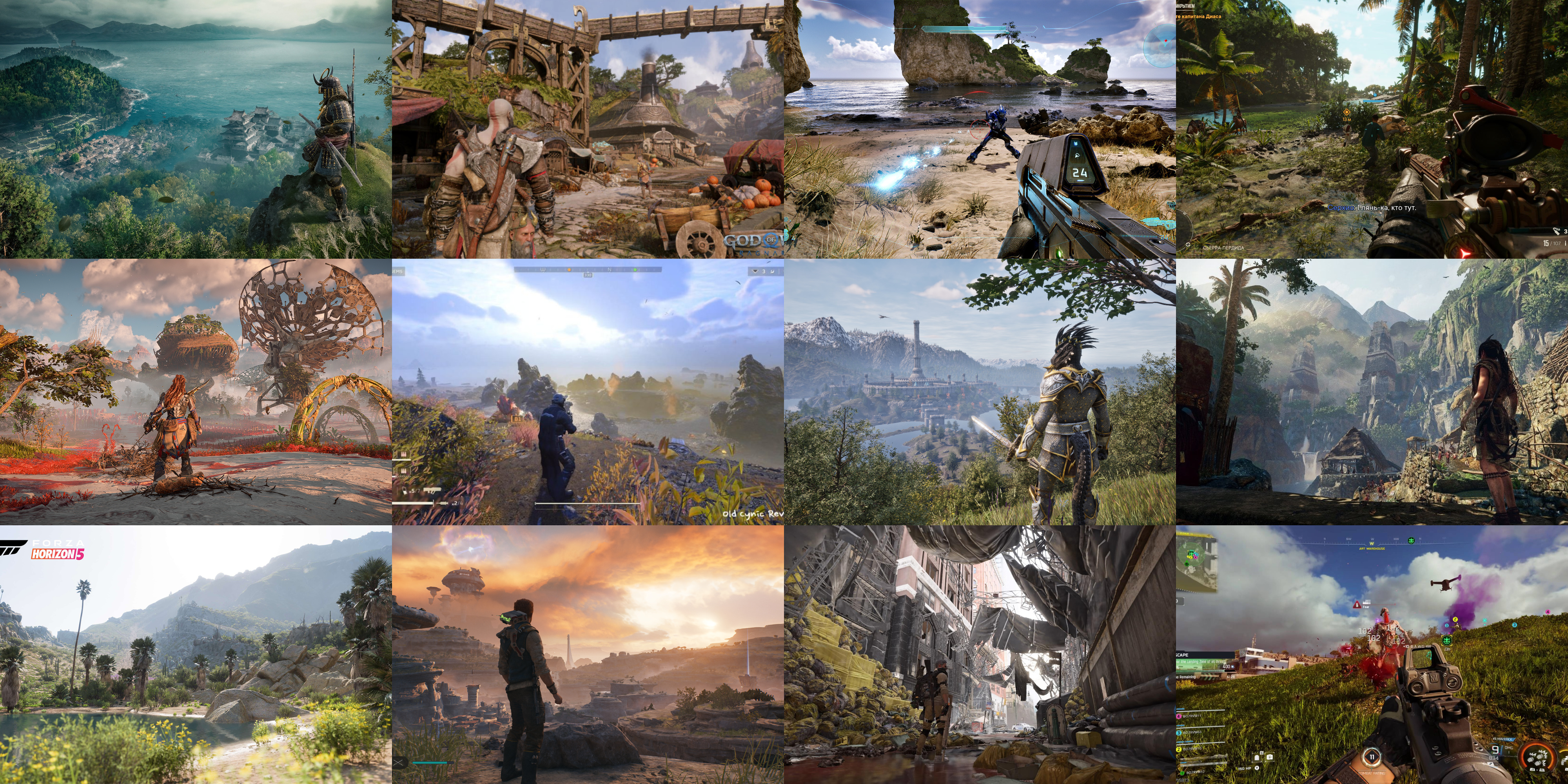
brown is out. lush greens and floaty blues are in. why this homogeneity? i have some theories, and i'll rank them in terms of personal conviction, ascending
theory 1: the transition to hdr pipelines / pbr materials
the industry settled on PBR (physically-based rendering) textures, and every texture in every game has normals, roughness maps, specular maps, and albedo. furthermore, while the prior generation of consoles could do HDR pipelines, they typically didn't[citation needed]. as a result, input RGB texture colors might have very little correlation between outputted pixels on a screen. as a result, everything has to be designed for the most general case possible, which results in a kind of generic "match what the camera would do" look.
theory 2: open world games
yes, "open world" is a genre, not an aesthetic. but much like the above point, in an open world game you might have to have a lot more assets be "generalized" for the most common base case than you would for a tightly-designed linear level, since you're likely going to need to repeat assets for large open worlds. i think there is a correlation here somewhere at the very least.
theory 3: consolidation of game engines
"oops all Frostbite" or "oops all Unreal Engine" is not literally true, but it feel spiritually true. it's not necessarily that the engines themselves do not limit the aesthetic, but taking the "happy path" through the lighting and tonemapping capabilities of the respective engines winds up with everything feeling about the same as everything else.
theory 4: more cargo culting / cross-industry pollination
if in 2008 the status quo was "copy Gears of War", maybe the status quo now is "copy..." well. unlike 2008, there doesn't really feel like there's a smash hit game being copied; the aesthetic is rather incestuously being created and recreated in Battlefield, Call of Duty, Halo, God of War, Assassin's Creed, and so on.
regardless, the point stands. "make the game look exactly like the last thing that sold 100 morbillion units" will never not be a request given to the art team